How to Track Which Startup Directories Send You Users
A directory listing is only useful if the right people find your product. Learn how to track visits, signups, and actual use from each site.
Oct 7, 20265 min read
On this page
You listed your product in several startup directories. Which one sent people who actually tried it?
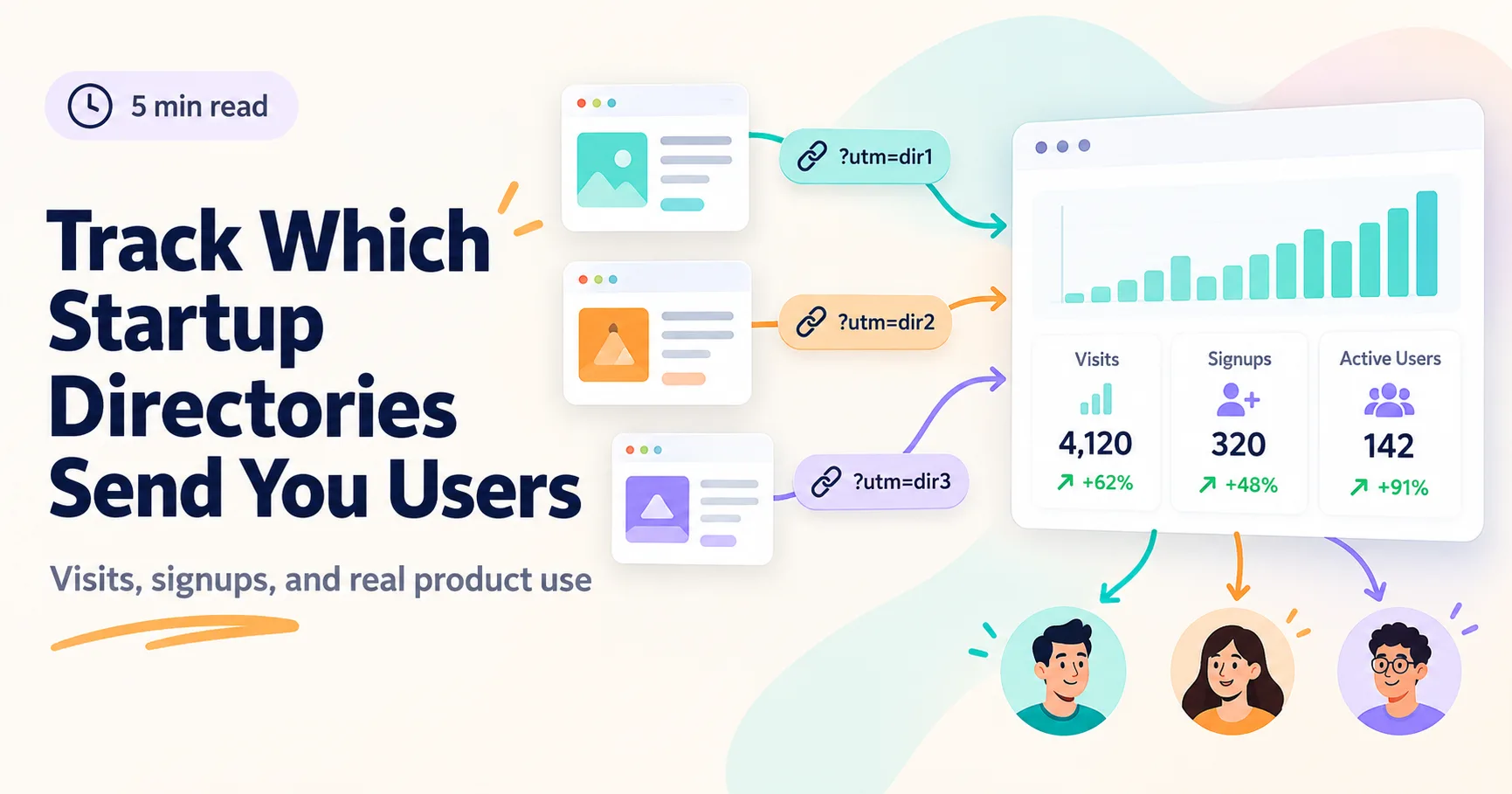
The number of listings cannot answer that. Neither can a directory’s popularity score. To find out, give each listing a trackable website link, then compare visits, signups, and what people did after signing up.
You can start with a spreadsheet and the analytics tool you already use.
Decide what counts as a useful visit
A visit is a start, not the final result.
For a SaaS product, you might care about completed signups and people who use the main feature. For an app, it might be installs and first use. If your product sells through a contact form, it might be qualified enquiries.
Pick one action that shows real interest. Write down how you will measure it before submitting to more directories.
Give each directory its own link
A UTM link is your normal website URL with a few labels added. Those labels tell your analytics tool where a visitor came from.
For example:
https://example.com/?utm_source=directory_name&utm_medium=referral&utm_campaign=product_launch
Replace example.com with your website and directory_name with the name of the site where you are listing your product.
The three labels have different jobs:
utm_sourcenames the directory.utm_mediumdescribes the type of link.referralworks for a regular directory listing.utm_campaigngroups the links from this launch.
Use a different source name for each directory, but keep your spelling consistent. indieneed, IndieNeed, and indie_need can appear as separate entries in a report.
If your website URL already has a question mark, use a URL builder instead of adding another one by hand. Google provides a guide to campaign links.
Some directories remove tracking labels or require a plain website URL. After your listing goes live, open its website link and check where it takes you. If the labels are removed, you may still see visits from that site's domain in your referral report, but attribution will be less clear.
Check that your own website records signups
A traffic report can tell you that someone arrived. To know whether they signed up, your product must record a completed signup or another useful action.
Test this with your own account before comparing directories. Open a tracking link, complete the action, and check that your analytics recorded it.
If you use Google Analytics 4, look in Reports → Acquisition → Traffic acquisition. You can view sessions by source and medium, and compare them with events you have marked as important. Other analytics tools may use different names, but the question is the same: what did visitors from this source do?
Directory click counts and website sessions may differ. Some people close the page before it loads, block analytics, or return later another way. Do not force the reports to match exactly.
Keep a small directory scorecard
You do not need a complicated dashboard. Review each listing after it has had time to be seen.
| Directory | Listing live? | Website visits | Signups | First useful actions | Notes |
|---|---|---|---|---|---|
| Directory name | Yes or no | From your analytics | From your product | From your product | Questions, feedback, or problems |
Add the listing date and the link you submitted to your own spreadsheet. That makes it easier to spot a broken listing or tracking link later.
Do not judge a directory only by its first day. Some launch boards get attention quickly. A category directory may send occasional visitors over a longer period. Check again after a month.
What if a directory sends visits but no signups?
Open the listing and your website side by side.
Does the listing describe the same product visitors see when they arrive? Is the category right? Is the price clear? Does the link land on a useful page?
If visitors arrive but leave at signup, test the form on a phone. If they create accounts but never use the product, look at the first screen inside the app.
The source may also be a poor fit. A large directory with an audience that does not need your product is less useful than a small, focused site whose visitors do.
What if analytics says “direct” instead?
“Direct” traffic often means your analytics tool could not identify a source. A visitor may have used a saved link, opened it from an app, or arrived through a path that did not pass referral information.
Do not assign every unexplained visit to a directory just because you submitted there that day. Keep it as unknown unless you have better evidence.
Trackable links make the picture clearer, but they will not tell you the full story of every customer.
Which directories should you keep using?
Look for sites that send people who take a meaningful next step. Read any questions or feedback those visitors leave. Also notice how much work it takes to keep a listing accurate.
A directory worth maintaining might send only a few visits if those visitors are a good fit. A listing with impressive scores but no relevant traffic may not deserve more of your time or money.
If you are choosing where to list your product next, use the startup directories page and the startup submission guide. Choose sites that fit your product, track their links, and let the results guide your next submission.
Launch your product on IndieNeed
Free to submit, hand-reviewed, and you pick the launch day.
Submit a productProducts to explore
Related articles
How to Ask Users for Honest Product Reviews
Want useful reviews for a new product? Ask people who have actually used it, make the request easy, and welcome criticism.
Sep 29, 20265 min read
How to Create a Better Product Listing on IndieNeed
A good product can still get ignored if people don't understand it. Here's how to create a clear Indie Need listing that helps visitors quickly understand what you built and why it's useful.
Aug 21, 202611 min read

Introducing IndieNeed: A Better Way to Launch Your Product in 2026
Launch day shouldn't feel like shouting into an empty stadium. Here's why we built Indie Need — a fairer home for indie makers — plus the launch habits that actually work in 2026.
Aug 13, 20265 min read