Introducing IndieNeed: A Better Way to Launch Your Product in 2026
Launch day shouldn't feel like shouting into an empty stadium. Here's why we built Indie Need — a fairer home for indie makers — plus the launch habits that actually work in 2026.
Aug 13, 20265 min read
On this page
Most launch days feel like shouting into a stadium after everyone has gone home. You spend weeks building something you're proud of, you pick a date, you post it everywhere you can — and then you refresh the page, watch a handful of visits trickle in, and wonder if you did something wrong.
You probably didn't. The problem is rarely the product. It's that the places built to help you launch have quietly stopped being built for you.
That's the short version of why we made Indie Need. The longer version is worth a few minutes, because it doubles as the most honest launch advice we can give you for 2026.
Why we built Indie Need
We're makers first. Between us we've shipped side projects that went nowhere, one or two that quietly paid the rent, and plenty that taught us more from failing than the wins ever did. Along the way we kept running into the same wall: the discovery platforms that indie makers rely on now reward the people who already have an audience, a launch team, and a budget for "featured" placement.
If you're a solo developer in a different timezone, or a two-person team shipping between day jobs, that math doesn't work. You get one shot on launch day, the algorithm shrugs, and your product disappears under a wall of well-funded noise.
So we built the thing we wished existed:
- A launch that lasts longer than a day. Products stay discoverable through the week and live on in category and collection pages, not just a single frantic morning.
- Ranking that rewards genuine interest, not who could rally the most upvotes in the first hour.
- Real reviews and comments from people who actually tried the thing — signal, not applause.
- Every product hand-reviewed before it goes live, so the feed stays worth reading.
We're new, and we'll say that plainly. There's no giant community here yet — there's a foundation, a point of view, and the makers who decide to build it with us. If that sounds like the early, scrappy internet you miss, you're in the right place.
What "launching well" actually means in 2026
Here's the part that's useful whether or not you ever post on Indie Need. After watching a lot of launches up close, the ones that work tend to share the same unglamorous habits. None of them are secrets. Most people just skip them because they're less fun than picking a launch date.
1. Earn attention before you ask for it
The single biggest predictor of a good launch is what happened in the three weeks before it. Not a marketing budget — a handful of real relationships. Show your work in progress. Answer questions in the communities you already belong to. Help ten people with their thing before you ask a hundred to look at yours.
By launch day you don't want an audience of strangers. You want fifty people who already know your name and were quietly waiting for the link.
A launch isn't the start of the conversation. It's the moment you finally have something to point the conversation at.
2. Say what it is in one plain sentence
Open your landing page and read the first line out loud. If a friend outside your field couldn't repeat what your product does back to you, you have a clarity problem, not a traffic problem.
"AI-powered platform to supercharge your workflow" tells me nothing. "Turn a folder of receipts into a tax-ready spreadsheet in one click" tells me everything. Specific beats impressive every single time. Write the boring, concrete sentence — then build the page around it.
3. Pick the day, but don't worship it
Choosing a launch day is worth it: it gives you a deadline, a reason to tell people, and a moment for momentum to compound. But treat it as a starting line, not a finish line. The makers who burn out are the ones who pour everything into 24 hours and have nothing left for the follow-through.
Plan the week after launch before you plan the day itself. What will you post on day three? Who will you personally thank? Which piece of feedback will you turn into a visible update? Momentum is a series of small, deliberate pushes — not one heroic shove.
4. Treat your first users like collaborators
Your earliest users are not a metric. They are the most valuable feedback you will ever get, and they showed up when showing up cost them something. Reply to every comment. Fix the small thing someone flagged and tell them you did. A maker who visibly listens turns first-time visitors into people who bring their friends.
This is also, quietly, the best marketing that exists. Nobody can fake caring at scale, which is exactly why it stands out.
5. Measure the right thing
Upvotes and traffic feel good and mean little on their own. The number that actually tells you something is this: did anyone come back? One person who returns a week later is worth more than a hundred who clicked once and forgot. Optimise your launch for the second visit, not the first.
Where we go from here
We're opening the doors with a simple promise: if you built something real and useful, you deserve a fair shot at being found — regardless of how big your following is. No pay-to-win placement. No games. Just a clean, honest place to put your work in front of people who are genuinely looking for their next favourite tool.
If you're a maker, submit your product and pick a launch day. If you're the kind of person who loves finding things before everyone else does, browse what's launching and leave an honest review or two — that feedback is worth more to a small maker than you'd guess.
This is the first post of many. We'll be writing about launches that worked and ones that didn't, the craft of shipping small, and the makers building quietly brilliant things. We're glad you're here at the start.
Welcome to Indie Need. Let's build something worth finding.
Launch your product on IndieNeed
Free to submit, hand-reviewed, and you pick the launch day.
Submit a productProducts to explore
Related articles
How to Ask Users for Honest Product Reviews
Want useful reviews for a new product? Ask people who have actually used it, make the request easy, and welcome criticism.
Sep 29, 20265 min read
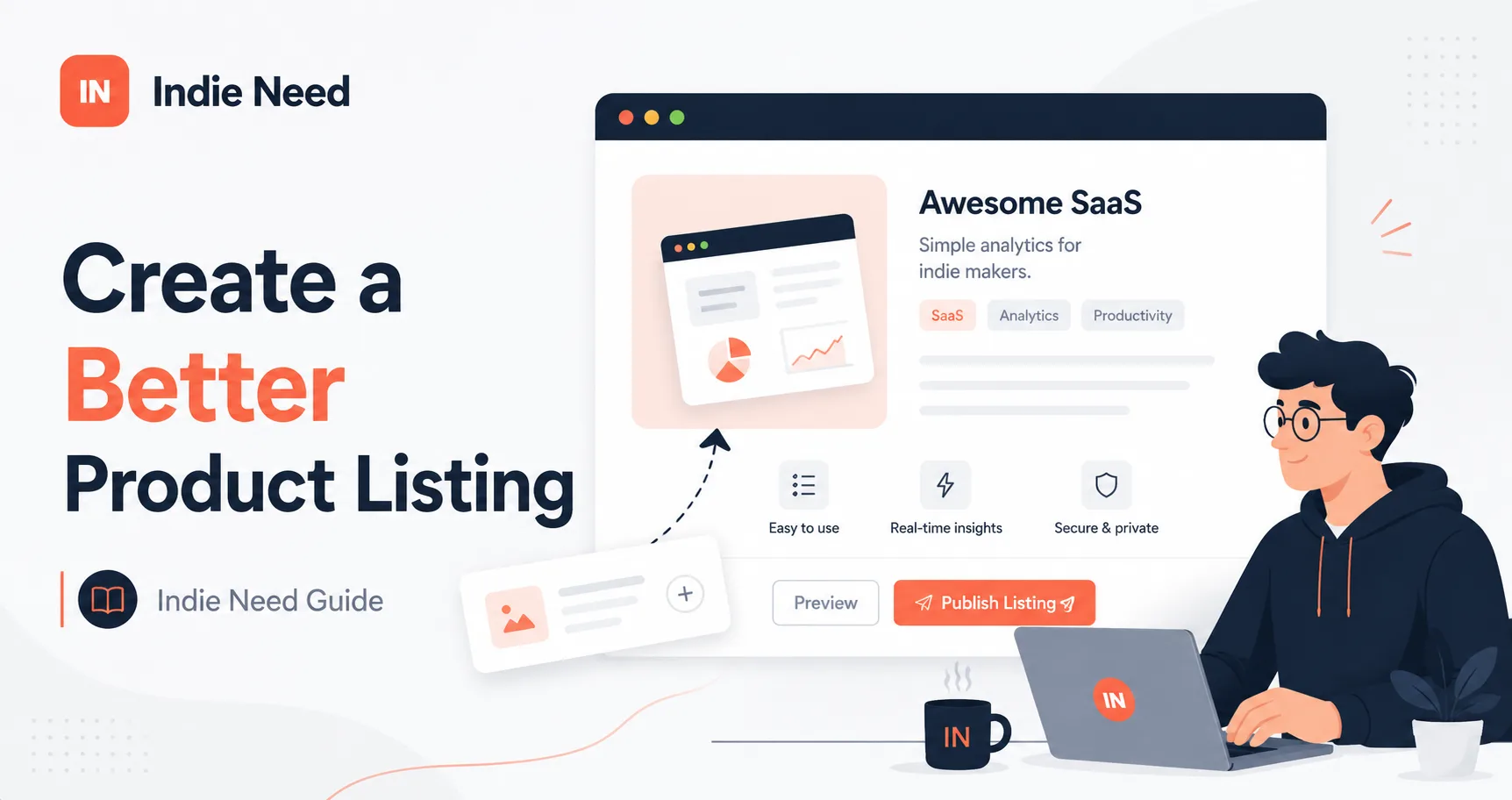
How to Create a Better Product Listing on IndieNeed
A good product can still get ignored if people don't understand it. Here's how to create a clear Indie Need listing that helps visitors quickly understand what you built and why it's useful.
Aug 21, 202611 min read